Share Diagnosis
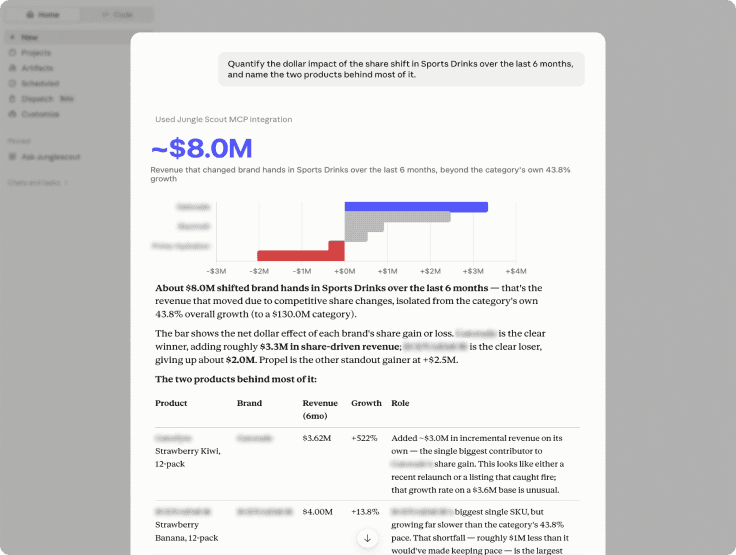
A share shift isn’t always the whole story. Diagnose why share moved, size the dollar impact, and find out whether the cause is structural or fragile. Get a clear verdict, the specific factors behind it, and where to focus next.
Example Questions
- “Why is [brand] losing ground in [category]?”
- “Why did we gain or lose share?”
- “Why is [brand] declining?”
- “Diagnose why we lost share in [category] last quarter; is it price, distribution, or a specific competitor?”
- “Is our recent share gain in [category] structural (product/price advantage) or fragile (a competitor’s temporary stockout or promo)?”
- “Are we losing share broadly across [category], or is it concentrated against one competitor?”
Frequently Asked Questions
It examines the common drivers of Amazon share movement: price changes, promotions, distribution and in-stock status, new launches, and gains or losses against specific competitors. It then ranks which factors explain the most of the change and sizes the dollar impact.
Yes. For a gain, it identifies what drove the increase and whether it’s structural, like a lasting price or product advantage, or fragile, like a competitor’s temporary stockout or promotion. That tells you whether to invest behind the gain or prepare for it to fade.
A client-ready narrative in four parts: a verdict on what happened, the specific factors behind it, the estimated dollar impact, and where to focus next. It’s written to share with stakeholders or clients as-is, not a data table to interpret yourself.
Both. You can ask why you’re losing ground to one named competitor, or why share moved across a whole Amazon category. It also tells you whether a loss is spread broadly or concentrated against one rival.
In Ask Cobalt inside Jungle Scout Cobalt, and through the Jungle Scout MCP in AI tools like Claude and ChatGPT, where it runs as the share-diagnosis skill.
