Most product launches on Amazon are decided long before launch day. What a brand chooses to make, how it prices, what it promises on the listing, and how it drives early traffic all shape whether a new product finds its footing in the first 90 days.
That’s the premise of the New Product Success Playbook, which Jungle Scout co-authored with Amazon’s New Product Success team. Jungle Scout CTO Sam Johnson sat down with Ami Pandya, Head of Product Management, New Product Success at Amazon, to talk about how sellers can combine Amazon’s tools with Jungle Scout’s market intelligence to launch with more confidence.
Every launch decision compounds
The playbook opens with one idea: product success is a system, not a tactic. Sam explained why that matters in practice. Validating a product, understanding how it sits against the competition, and knowing which attributes and formats drive real purchase behavior all shape what comes next. Those choices determine how you build your listing and how you plan your first advertising push.
“All those pieces have to fit together for you to have a successful launch over those first 90 days,” Sam said.
Amazon’s team sees the same pattern from their side. Sellers often treat launch day as the finish line, when a new product with no reviews or sales history is still invisible to shoppers. The brands that break through treat the first 90 days as a sprint and build momentum on purpose.
Validate the opportunity through two lenses
Phase one of the playbook covers discovering and validating the opportunity. Sam framed it as two complementary views of the same marketplace.
- Amazon’s view: first-party consumer signals that show what shoppers search for, how they browse, and how they decide to buy. Tools like Product Opportunity Explorer and Amazon’s new Validate Your Product Ideas feature turn those signals into a free competitive assessment of a product concept.
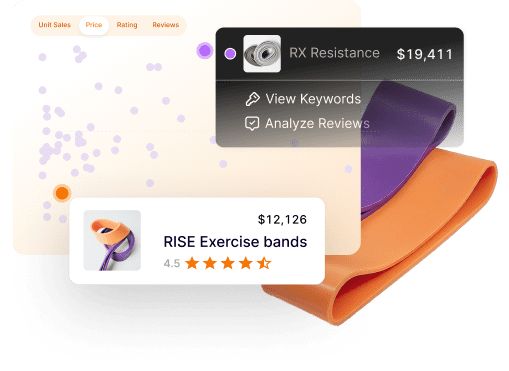
- Jungle Scout’s view: the market around that shopper. That means category trends, pricing, keywords, product attributes and formats, and what competitors are selling.
“These two things together really allow you to build a full system for how to launch successful products,” Sam said.
The real advantage is speed of iteration. Sellers can move from the macro view of a category down to specific product features and back again, refining a concept with each pass. By the time they commit to inventory, they’re working from data-driven evidence rather than a hunch.
Let real customers refine the plan
Phases two and three cover the launch plan and early growth. This is where testing gives way to real data, according to Sam. Sellers can see how actual customers react to the product, the content, the price, and the delivery promise, then adjust while the launch window is still open.
Advertising is one of the richest sources of that feedback. Shoppers meet a product across many keywords, placements and contexts, and their responses show what to change next. Sam encouraged sellers to treat ad data as a research tool, not only a traffic lever.
On the Amazon side, a new AI-powered 90-day launch plan studies what top competitors did in their first 90 days and recommends which actions to take, in what order and how to configure them.
The costliest risk is the wrong product
Amazon now shares more of the financial risk of a launch. Its New Selection Program offers eligible branded FBA products reduced referral fees, waived inventory fees on early units, Vine and coupon credits, and free returns processing for up to 120 days.
Sam pointed to a second risk that no fee discount can offset: opportunity cost. Choosing the wrong product or the wrong opportunity has a knock-on effect on every decision downstream, from inventory to listing to advertising. That’s why deeper market research at the start pays off across the whole system.
Use Amazon insight beyond Amazon
Amazon is a powerful sales channel, but Sam made the case that it’s just as valuable as a source of consumer insight. More than 40% of U.S. ecommerce revenue runs through Amazon, so it’s where shoppers search, compare, and buy. At that scale, the marketplace reflects what’s happening across the broader market.”
That’s why Jungle Scout encourages brands to look past sales optimization alone. The same data can inform product development, marketing and supply chain strategy that carries into other channels and retailers. “I’m not starting from zero when I’m making those decisions,” Sam said. Brands may adjust for each channel, but the foundation stays grounded in what Amazon shoppers already revealed.
From insight to action
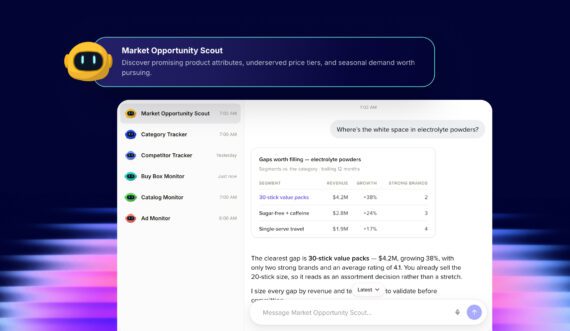
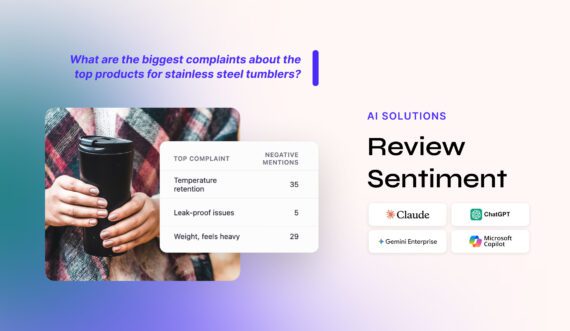
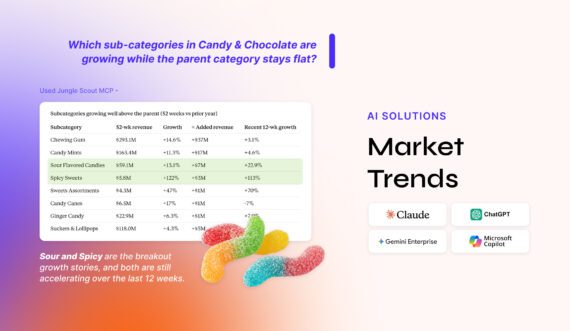
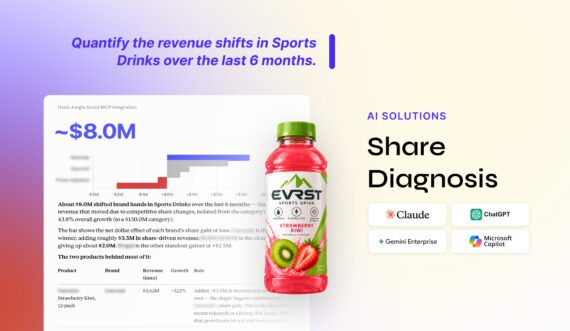
Both companies are using AI to shorten the path from data to decision. Amazon is building toward a conversational agent that acts as a seller’s personal launch team. At Jungle Scout, Sam highlighted AI solutions like Jungle Scout MCP and a chat interface that bring market intelligence to the forefront, so teams spend less time digging through data and spreadsheets and more time going from insight to action.
Product success is a system, and every part of it runs better on data. The New Product Success Playbook shows how to build that system with Amazon and Jungle Scout working together to help sellers launch with confidence.
Download the playbook or Get a Demo to see Jungle Scout’s market intelligence in action.