Every brand on Amazon knows its own numbers. Far fewer know how those numbers compare with the competitor one spot ahead of them in search. The 2026 Marketplace Index answers that question across six markets and more than 3,500 brands.
PODEAN, a global marketplace agency, evaluated those brands and 50,000 ASINs across the US, UK, Germany, Mexico, Brazil and Australia. To make sure every ranking starts with the brands actually winning on Amazon today, PODEAN selected the brands in each category using sales data from Jungle Scout’s Cobalt.
Each brand then received an MDEX score, PODEAN’s measure of how well a brand executes on Amazon. The score is built on five pillars: Retail, Content, Customer Sentiment, Media and, new this year, AI Readiness.
One finding has held for four straight editions. US brands that score above 85% almost always rank in the top five for market share in their category, which shows that execution and sales move together.
The basics are now the baseline
US brands averaged a 76.7% MDEX score in 2026, up from 67% in 2023. Prime eligibility shows the shift most clearly, climbing from 49% of evaluated products in 2023 to 89% this year.
When everyone covers the basics, standing still means falling behind. Only 40% of brands evaluated in both 2023 and 2026 improved their score, and many of those that didn’t lost rank to competitors that moved faster.
Most brands defend. Few compete.
Nearly every brand (96%) runs Sponsored Products on searches for its own name and holds that placement 75% of the time. On their category’s top keywords, where new customers are won, those same brands appear just 36% of the time. Sponsored Brands placements on category searches are even rarer, at 8%.
That means most ad budgets protect demand a brand already has instead of reaching shoppers who haven’t chosen a brand yet.
AI Readiness is the new gap
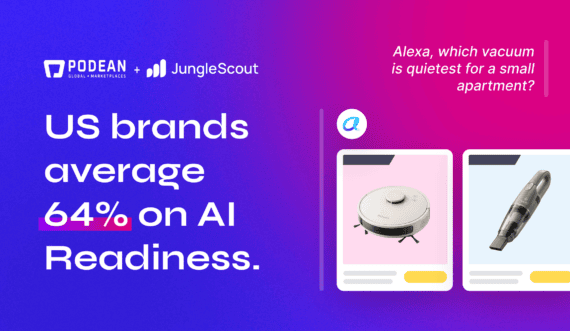
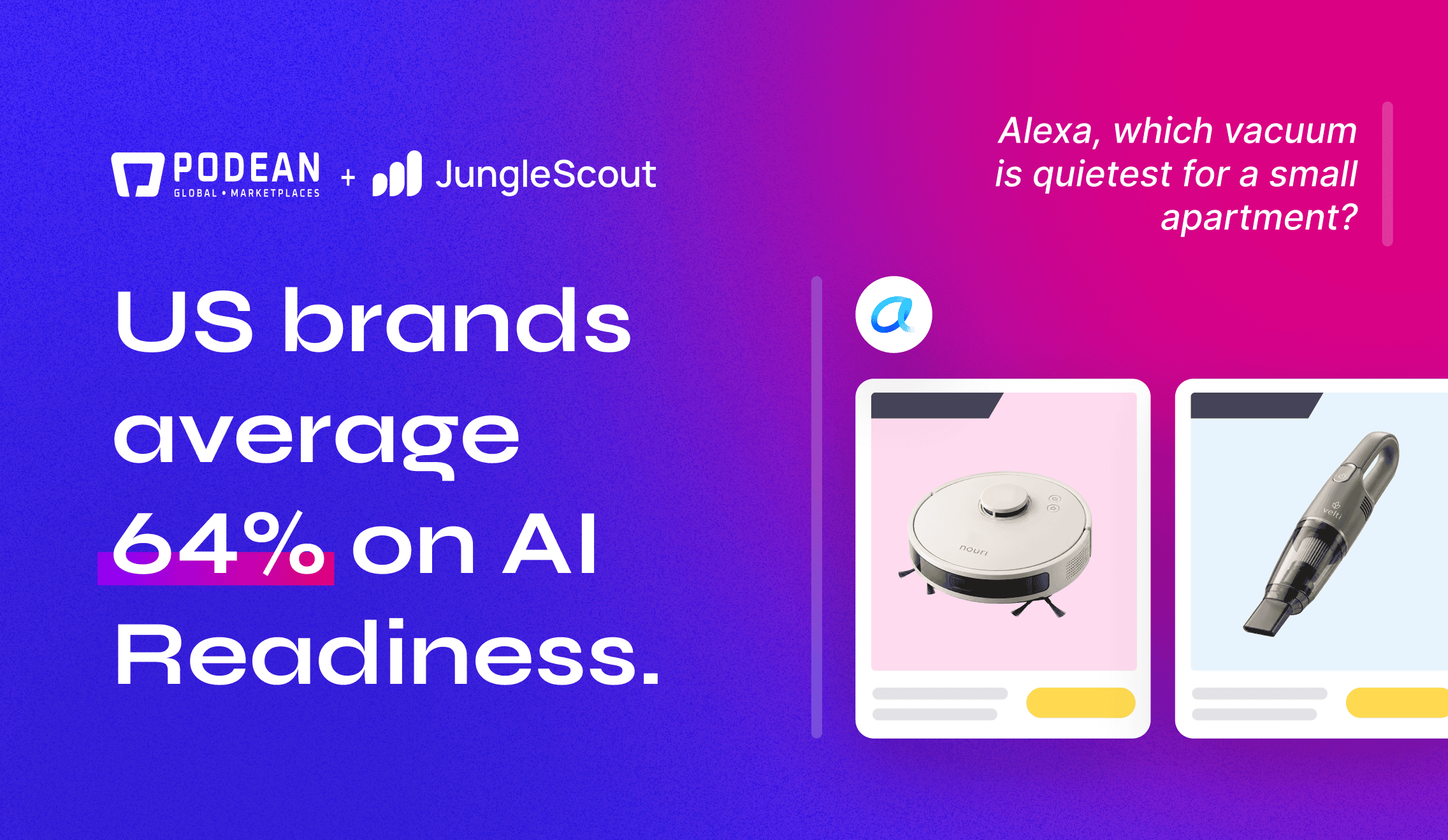
More shoppers now skip the search results and ask Alexa for Shopping direct questions, like which vacuum is quietest for a small apartment. The AI Readiness pillar measures whether a product page gives AI enough context to recommend that product with confidence.
US brands averaged 64% on AI Readiness. Just 18% meet Amazon’s new 75-character title standard, and only 10% of listings use the premium Q&A module. When a brand leaves a shopper’s question unanswered, Alexa pulls the answer from customer reviews instead. Brands in Brazil, Australia and Mexico are further ahead on short titles, since many US brands built long, keyword-heavy titles under Amazon’s previous rules.
Content exists, but it isn’t working hard enough
Just 34% of ASINs met the standard for bullets and descriptions. About one in five A+ Content modules is a generic brand template rather than content written for the product, and 37% cross-promote other products in the brand’s catalog. The tools are in place. What’s missing is content that answers the questions shoppers actually ask.
Where categories lead and lag
Oral Care, Household Supplies and Pet Supplies post the highest average MDEX scores of the 32 US categories. Fragrances ranks last in the US and trails in every other market, even though the beauty categories around it lead. Grocery and Electronics still lag overall, though grocery segments raised their average score by 6.2 points this year.
See where your brand ranks
The Marketplace Index shows where your MDEX score stands, which competitors are pulling ahead and which pillar holds your biggest opportunity. Jungle Scout partnered with PODEAN again to ground every ranking in real Amazon sales data.
Download the 2026 Marketplace Index.
Want that same competitive view of your category every week instead of once a year? Get a Demo of Jungle Scout’s Cobalt.